How to Switch Jewelry Manufacturers Without Disrupting Production
How to Switch Jewelry Manufacturers Without Disrupting Production
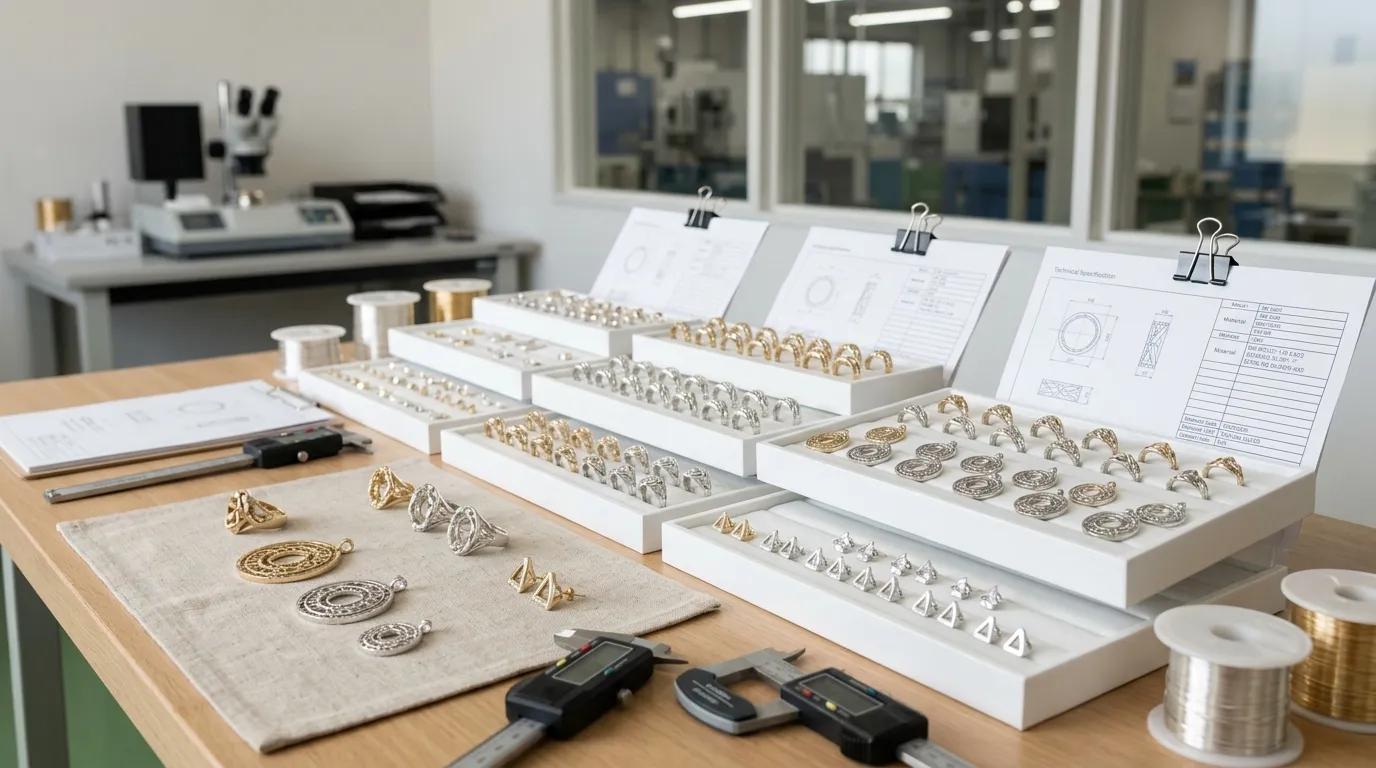
Switching jewelry manufacturers can solve recurring quality, communication, or production problems, but a poorly planned transition can create new ones. Your products may need to be sampled again, materials may have different specifications, and the new factory may use processes that produce a different finish. Meanwhile, existing orders still need to be completed and customers still expect products to be available.
The safest approach is to treat a manufacturer change as a controlled production transfer. You need to document your products, qualify the new supplier, approve samples, protect inventory coverage, and verify initial production before moving more orders.
At SSJew, our stated capabilities include custom jewelry manufacturing, OEM/ODM, CAD, prototyping, sampling, surface finishing, and quality inspection. For any specific project, the appropriate processes and production arrangements should be confirmed against your product requirements.
Why Changing Jewelry Manufacturers Can Disrupt Production
A jewelry design is more than an image or a CAD file. Its final appearance depends on material specifications, dimensions, components, manufacturing methods, surface preparation, finishing, assembly, and inspection requirements.
Two factories may interpret an incomplete specification differently. One may use a particular polishing sequence, while another may prepare the surface differently before electroplating. The resulting products may look similar in a rendering but differ in color, texture, dimensions, or assembly details.
Disruption can also come from the commercial side. Your existing supplier may still hold unfinished orders, components, molds, or product records. The new manufacturer may need time to review the design and produce an approved sample. If you stop existing production before the replacement process is validated, a gap in supply can occur.
You can reduce these risks by managing three workstreams together:
-
Product transfer: specifications, files, samples, tooling, and revision history.
-
Production readiness: supplier capability, sampling, quality criteria, and scheduling.
-
Business continuity: inventory, open orders, launch dates, and replenishment plans.
Step 1: Audit Your Existing Products and Orders
Before approaching a new manufacturer, establish exactly what needs to be transferred. Start with a SKU list and classify each product by sales importance, technical complexity, inventory level, and current production status.
Your records should include, where applicable:
-
Current CAD files, technical drawings, and approved dimensions.
-
Material grades, component specifications, stone details, and finish requirements.
-
Reference samples, photographs, and documented approval notes.
-
Packaging requirements and product-specific inspection criteria.
-
Open purchase orders, work in progress, available inventory, and expected replenishment dates.
-
Tooling or mold details, ownership records, and relevant contractual terms.
Check that the files represent the latest approved version. If a design has changed several times, label the current version clearly and retain the revision history. Sending an outdated drawing can create the same production problem you are trying to leave behind.
Also identify which products are most urgent. A high-volume core SKU with limited inventory may need a different transition plan from a new design that has not yet launched.
Step 2: Qualify the New Jewelry Manufacturer
Do not select a replacement supplier based on quotation alone. First confirm that the manufacturer can address the specific problems that led you to consider switching.
If your main concern is inconsistent quality, ask how product specifications are documented, how samples are approved, and how bulk production is inspected. If your issue is limited technical capability, discuss the processes required by your actual designs. If delivery reliability is the problem, ask how production milestones, material availability, and schedule changes are managed.
Relevant manufacturing processes may include CAD development, prototyping, casting, stamping, CNC machining, polishing, stone setting, electroplating, PVD, assembly, and quality inspection. Not every design requires every process, and a service list alone does not demonstrate that a supplier can meet a specific tolerance, finish, or construction requirement.
Share representative products rather than describing your collection only in general terms. Ask the supplier to identify technical questions, missing specifications, potential production constraints, and the steps required to approve a sample.
You should also clarify quotation assumptions, order requirements, communication responsibilities, and the documentation that will be provided for future reorders. Record what has been confirmed and what remains subject to technical review.
Step 3: Transfer Specifications and Production Records
A successful transfer requires more than sending product images. Your new manufacturer needs enough information to understand what must be reproduced and which characteristics are critical.
For each SKU, define the applicable requirements:
Materials and components. Specify the material, grade where applicable, component dimensions, stone details, and any required material documentation. Terms such as “gold color” or “silver finish” may be insufficient if you need a particular substrate, plating process, or surface appearance.
Dimensions and construction. Identify critical measurements, connection points, thicknesses, closure mechanisms, and assembly details. Explain which dimensions are essential to fit, function, or appearance.
Surface finish. Describe the required color, texture, polish level, and other relevant visual characteristics. Where appropriate, use an approved physical reference and documented specifications rather than relying only on screen images, which may display color differently.
Quality requirements. Define the defects that are unacceptable, the characteristics to inspect, and the agreed acceptance criteria. If you use a formal sampling plan, confirm the applicable standard and inspection level rather than assuming the supplier will use the same method.
Version control. Give each approved drawing, sample, and specification set a clear revision identifier. Record changes so that your new supplier does not unknowingly reproduce an obsolete version.
If you are transferring CAD files, molds, or tooling, first confirm ownership, access rights, physical condition, and compatibility with the new supplier's processes. Existing tooling may not be ready for direct use in a different production environment. A technical review may be necessary before you rely on it for a commercial order.
Step 4: Approve Samples Before Bulk Production
Sampling is a validation stage, not just a formality. The new manufacturer must demonstrate that the documented requirements can be translated into a product that you are prepared to approve.
Review the sample against the specifications, not simply against your general impression of the original product. Depending on the design, inspect dimensions, weight where specified, surface appearance, stone placement, component alignment, closures, assembly, and packaging.
Pay particular attention to process-dependent characteristics. Polishing can affect surface geometry and the appearance of edges. Stone setting requires suitable seat dimensions and secure assembly. Electroplating results depend partly on surface preparation and process control. These details may need specific instructions or sample revisions.
If the sample does not meet your requirements, document each discrepancy and request a defined correction. Approve the revised sample only when the agreed criteria are met. Keep a record of the approved sample and the corresponding drawing revision.
Do not assume that approval of one sample guarantees bulk consistency. Sampling confirms a product at a particular development stage. You still need production controls and inspection criteria for the actual order.
Step 5: Plan Inventory and Transfer Orders in Phases
Your inventory position should influence the timing of the switch. If you have enough stock to cover expected demand during sampling and initial production, you may have more flexibility. If a core product is close to running out, the transition needs tighter coordination.
Estimate inventory coverage using available sellable stock and realistic demand, while accounting for open orders and replenishment already in progress. Then compare the expected timeline for new-supplier qualification, sample approval, production, inspection, and shipping.
Avoid transferring every SKU at once unless your circumstances justify it. A phased approach may be more practical:
Product group
Possible transition approach
Main consideration
Core, high-demand SKUs
Prioritize qualification and maintain a clear supply plan
Stockout risk and replenishment timing
Lower-volume established SKUs
Transfer after the initial process is validated
Whether the new supplier can reproduce existing specifications
New or unproven designs
Use the normal development and approval process
Design changes and uncertain demand
Technically complex products
Allow additional time for process review and sampling
Construction, finishing, and quality requirements
These are planning principles, not fixed rules. The right sequence depends on your inventory, product complexity, contractual commitments, and the new supplier's verified capabilities.
If your existing manufacturer is still producing open orders, agree on which orders will be completed there and which will move. Avoid duplicate orders or conflicting instructions for the same SKU. Make responsibility for remaining materials, unfinished goods, and final inspections explicit.
Step 6: Verify Initial Production Before Scaling
Once the new supplier has produced an initial order, compare the result with the approved sample and agreed specifications. Review the relevant quality records and investigate any differences before increasing the order quantity.
Your verification may cover material identity where required, dimensions, surface finish, plating appearance, stone security, assembly, packaging, and other product-specific requirements. The inspection method should reflect the product's risks and the acceptance criteria agreed before production.
If a discrepancy occurs, record it, determine the likely cause, and agree on corrective action. Do not increase order volume simply because the shipment has arrived or the sample was previously approved.
Define the conditions for expanding production in advance. These might include acceptable inspection results, resolved critical issues, complete production records, and confirmation that the supplier can meet the next order's requirements. The criteria should be specific to your product and commercial risk.
After the initial order is accepted, continue monitoring reorders. Consistency across subsequent batches is important because your customers expect the same product characteristics over time. Retain approved samples and specification revisions as references for future production.
Common Mistakes to Avoid
Stopping the old supplier too early. Ending production before the replacement supplier is qualified can create avoidable stock shortages. Coordinate the transition with open orders and realistic inventory coverage.
Choosing only by unit price. A lower quotation may not include the same materials, finish, packaging, inspection, or production assumptions. Compare like-for-like specifications and consider sampling, rework, and transition costs.
Assuming CAD files contain every requirement. A design file may describe geometry but not all material, finishing, assembly, or inspection expectations. Transfer the full product specification.
Skipping sample approval to save time. Unverified production can create larger delays if the bulk order does not match your requirements.
Moving all SKUs at the same time. A phased transition can limit exposure while you confirm that the new supplier can reproduce the required products.
Failing to improve the original process. If incomplete specifications or unclear approvals caused previous problems, changing manufacturers without correcting those gaps may produce the same outcome.
Frequently Asked Questions
How long does it take to switch jewelry manufacturers?
There is no single timeline. It depends on product complexity, the completeness of your records, sample revisions, material availability, tooling requirements, order size, and the new supplier's production schedule. Ask for a project-specific timeline with milestones for technical review, sampling, approval, production, and inspection.
Do I need to create new samples when changing factories?
In most cases, you should expect the new manufacturer to review the design and validate its production process. An existing approved sample is a useful reference, but it does not automatically prove that another factory can reproduce the product consistently.
Can I transfer my existing molds and CAD files?
Potentially, provided you have the necessary ownership or usage rights and the files or tooling are compatible with the new production process. Confirm their condition and suitability before including them in your transition schedule.
Should I move all my jewelry SKUs to the new supplier?
Not necessarily. Prioritize products according to sales importance, inventory risk, technical complexity, and production readiness. A phased transfer can help you identify problems before they affect the entire collection.
Discuss Your Production Transition With SSJew
If you are preparing to move your jewelry production, begin with the products, specifications, quality issues, and delivery requirements that matter most to your business.
At SSJew, our stated service capabilities include custom jewelry manufacturing, OEM/ODM, CAD, prototyping, sampling, surface finishing, and quality inspection. We can discuss your project requirements and determine which manufacturing processes and next steps are relevant to your products, subject to technical and commercial confirmation.
When you contact our team, share your product category, materials, approved specifications or reference samples, current production challenges, and expected order pattern. This gives us a clearer starting point for reviewing your requirements and discussing a practical production plan.
Explore our custom jewelry manufacturing services, review our jewelry materials and finishes, or contact our team about your production requirements.