How to Avoid Miscommunication in Custom Jewelry Production
How to Avoid Miscommunication in Custom Jewelry Production
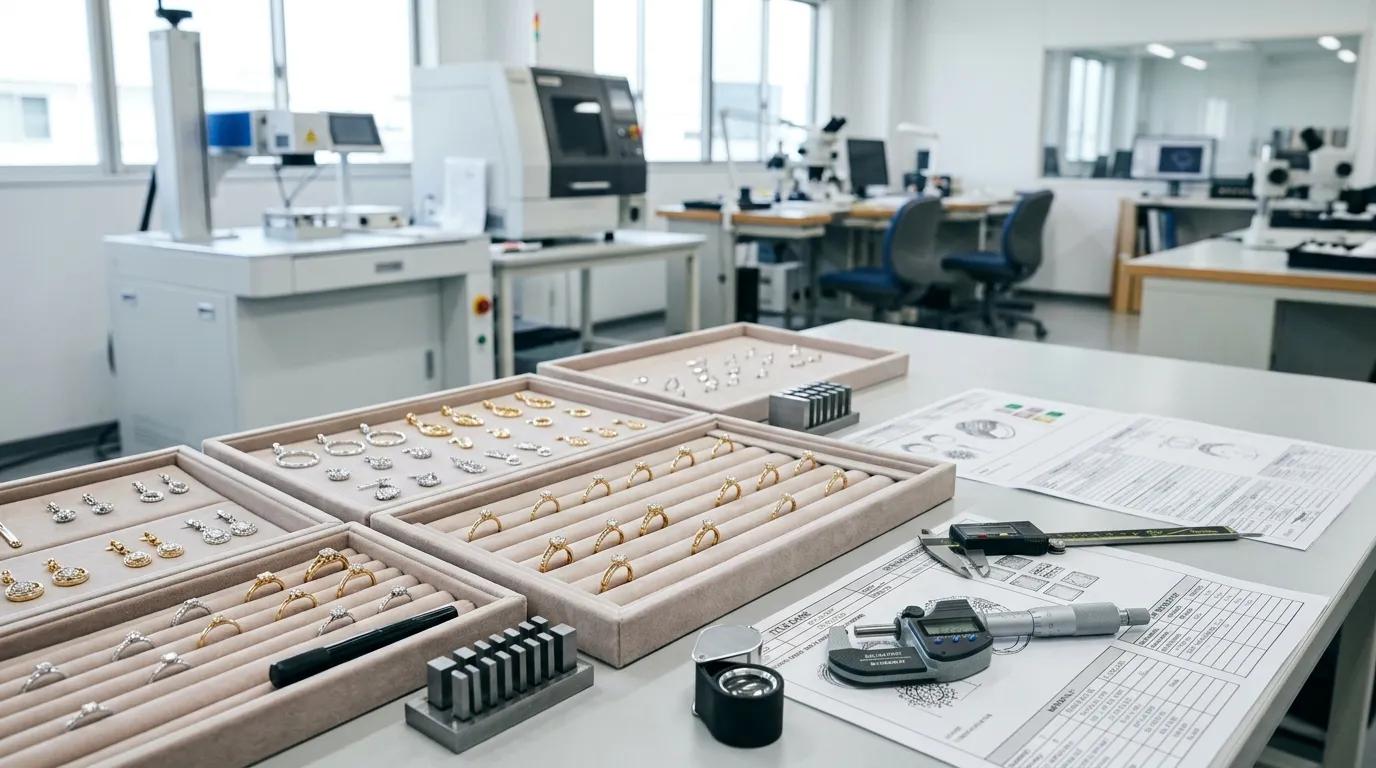
Miscommunication in custom jewelry production can lead to incorrect dimensions, unexpected finishes, repeated sampling, production delays, and additional costs. The most effective way to prevent these problems is to turn your design expectations into clear, documented manufacturing requirements before production begins.
At SSJew, we approach custom jewelry manufacturing as a process of translating your product requirements into technical specifications, samples, and production instructions. Clear communication at each stage helps both sides understand what must be produced, what needs approval, and how the finished jewelry will be evaluated.
Whether you are developing a new collection, launching a private label line, or placing a repeat order, the following practices can help you reduce avoidable errors and manage your production more effectively.
1. Why Miscommunication Happens in Custom Jewelry Production
Jewelry designs often combine visual details, small dimensions, multiple materials, and specialized finishing processes. A design may look clear on a screen while leaving important manufacturing questions unanswered.
For example, a reference image might show a polished gold-colored pendant, but it may not specify the base metal, plating requirements, pendant thickness, surface finish, or acceptable color variation. Different interpretations of these details can produce different results.
Common causes of miscommunication include:
-
Incomplete design information: Images are supplied without dimensioned drawings or construction details.
-
Ambiguous descriptions: Terms such as “lightweight,” “thick plating,” or “high polish” lack measurable definitions.
-
Unclear approval responsibilities: Neither side knows who can approve the sample or authorize changes.
-
Outdated files: Production instructions do not reflect the latest approved design.
-
Unspecified quality criteria: Expectations are discussed verbally but are not documented for inspection.
The solution is not simply to exchange more messages. You need a shared reference that records the agreed requirements and remains consistent throughout the project.
2. Turn Your Design Into a Clear Production Specification
Your design concept communicates the intended appearance. A production specification explains how that appearance should be manufactured and evaluated.
When you contact us about a custom jewelry project, provide the available design files, reference images, target materials, dimensions, quantities, and intended finish. We can then identify missing information and clarify the requirements that may affect manufacturing feasibility, cost, or quality.
Define materials, dimensions, and construction
Your specification should identify the base material, component dimensions, overall product size, relevant thicknesses, stone measurements, and assembly requirements.
For example, if you are developing a sterling silver ring, clarify the required ring sizes, band width, approximate thickness, stone dimensions, and any applicable material requirements. If your design includes moving components or several assembled parts, explain how those parts should fit and function.
CAD drawings can help communicate geometry and dimensions, but a CAD model alone does not necessarily define every material, finish, or acceptance requirement. These details should be recorded separately when they are not included in the approved files.
Also distinguish between mandatory specifications and flexible design preferences. This helps us understand which details must remain unchanged and where adjustments may be considered to improve manufacturability.
Specify finishes, colors, and stones
Appearance-related instructions deserve particular attention because descriptive language can be interpreted differently.
Instead of specifying only “gold color,” identify the intended finish and plating requirements where applicable. For stones, clarify the type, shape, size, setting style, and any relevant color or matching expectations.
If you have a physical reference, approved color sample, or previous production sample, identify it in your documentation. A reference image can communicate the general direction, but lighting, screen settings, photography, and material differences can affect how colors appear.
At SSJew, our relevant manufacturing processes may include polishing, stone setting, electroplating, PVD, and other surface-finishing operations, depending on the product and agreed specifications. The important step is to confirm which processes and final appearance requirements apply to your particular order rather than assume that a general description covers everything.
3. Establish a Reliable Sample Approval Process
Sampling is an important checkpoint between design development and bulk production. However, approving a sample is useful only when both sides understand exactly what has been approved.
Before sampling begins, confirm the design version, materials, dimensions, finish, stones, and other critical requirements. If a feature remains undecided, record it as an open item rather than treating it as finalized.
When reviewing the sample, assess the properties that matter to your product, including:
-
Overall dimensions, proportions, and weight where specified.
-
Material and component details.
-
Surface finish and color appearance.
-
Stone placement, alignment, and setting quality.
-
Assembly, closure, and functional performance where relevant.
Record required corrections in a single, organized list. Include annotated photographs or drawings where they make the issue easier to understand. For example, “reduce the pendant thickness from the approved drawing” is more actionable when accompanied by the exact dimension and a marked-up image.
After revisions, confirm which version is approved and whether another sample is required. Keep a written approval record identifying the sample or design version, approval date, and any outstanding conditions.
An important distinction: approving the visual appearance of a sample does not automatically confirm every production specification. If the sample has not been checked for a particular dimension, material requirement, or functional feature, do not assume that the feature has been verified.
4. Control Design Changes and File Versions
Design changes are common in custom jewelry development. The risk arises when an approved change is communicated informally but is not reflected in the files and instructions used for production.
Imagine that you approve a pendant design and later request a different stone size. If the revised CAD file reaches one team member but the original production drawing remains in use, the resulting pieces may follow different specifications.
To prevent this, establish a simple version-control process:
-
Assign a clear version number or date to each design revision.
-
Describe what changed and why.
-
Identify which drawings, material specifications, or sample approvals are affected.
-
Obtain written confirmation of the revised requirements.
-
Confirm that the superseded version is no longer the active production reference.
Keep project communication organized around the relevant product or SKU. If you manage multiple designs, colorways, or sizes, avoid relying on a single email thread to communicate changes across the entire collection.
We can work more accurately from clearly identified, approved information than from conflicting instructions distributed across messages and attachments. Before production starts, both sides should know which documents constitute the final manufacturing reference.
5. Align on Quality Standards Before Bulk Production
Quality expectations should be defined before mass production, not introduced only after finished goods arrive.
Your acceptance criteria should identify the defects or variations that matter most to your product. Depending on the design, these may include dimensional deviations, visible scratches, plating inconsistencies, uneven polishing, loose stones, assembly problems, or incorrect components.
Where measurable requirements are important, specify the applicable dimensions and tolerances rather than relying on general terms such as “perfect finish.” Where visual assessment is necessary, agree on appropriate reference samples or inspection criteria.
If your business uses AQL-based inspection, communicate the applicable sampling plan, inspection level, and acceptance and rejection criteria. AQL is an inspection-sampling framework; it does not mean that every unit has been individually inspected or that a specific defect rate is guaranteed.
At SSJew, quality requirements should be aligned with the product specifications and agreed inspection process. For your project, confirm which checks will be performed, when they will take place, and how any identified nonconformities will be handled. Specific inspection coverage or performance figures should be documented and verified rather than assumed.
It is also useful to distinguish critical requirements from cosmetic preferences. A loose stone, an incorrect ring size, and a minor variation in an agreed finish may have different implications for product safety, usability, and acceptance. Your inspection plan should reflect those differences.
6. Confirm Costs, MOQ, and Lead Time in Writing
Miscommunication can affect commercial terms as well as product quality.
A change in material, stone size, component structure, plating requirements, or packaging may affect manufacturing cost. Additional sampling or revisions may also influence the project schedule.
Before confirming your order, ask for written clarification of:
-
The agreed product specifications and order quantity.
-
MOQ requirements and whether they vary by design, material, or finish.
-
What the quotation includes, such as sampling, tooling, packaging, and finishing.
-
The conditions under which design changes may affect pricing.
-
The expected sampling and production schedule, including approval dependencies.
-
How delays, rework, or specification changes will be communicated.
Do not assume that the original quotation or lead time automatically remains unchanged after a substantial design revision. Instead, ask us to confirm the impact of the change before authorizing the next step.
A documented agreement helps you compare suppliers on a consistent basis. It also reduces the risk of discovering that two quotations cover different specifications, processes, or services.
7. Questions to Ask Your Jewelry Manufacturer
During supplier evaluation, ask questions that reveal how the manufacturer manages information rather than simply whether communication is available.
-
How do you confirm that our design requirements are complete before sampling?
-
Which files and specifications will govern production?
-
How are sample revisions documented and approved?
-
How do you communicate the cost and schedule impact of a design change?
-
What checks will be performed before bulk production and shipment?
-
How will you address a mismatch between approved specifications and finished goods?
The answers should describe a process you can verify. For example, a documented sample approval, a controlled drawing revision, and a clearly defined inspection plan provide more useful evidence than a general promise of good communication.
You should also evaluate whether the supplier identifies missing information early, explains manufacturing limitations clearly, and records decisions in a way your team can review later.
8. Common Communication Mistakes to Avoid
Avoid these preventable mistakes when managing your next custom jewelry order:
-
Sending only reference images: Supply technical details wherever they affect the finished product.
-
Using vague quality descriptions: Define measurable requirements or agree on suitable visual references.
-
Approving samples without reviewing specifications: Check critical dimensions, materials, finishes, and functions.
-
Changing requirements through informal messages: Update the relevant documents and obtain confirmation.
-
Leaving acceptance criteria until shipment: Agree on inspection requirements before production.
-
Assuming silence means approval: Require explicit confirmation at important decision points.
These practices do not eliminate every manufacturing risk, but they make misunderstandings easier to detect before they become expensive production problems.
FAQ
How can I communicate jewelry design requirements to a manufacturer?
Provide reference images, dimensioned drawings or CAD files where available, material specifications, finish requirements, quantities, and acceptance criteria. Ask the manufacturer to identify missing information before sampling.
Why can a bulk order differ from an approved jewelry sample?
Differences may arise from unclear specifications, unrecorded design changes, material or finishing variation, or insufficient production controls. Confirm the approved reference, critical requirements, and inspection process before authorizing bulk production.
How do I avoid extra costs caused by design changes?
Document each revision, ask for its impact on material use, tooling, sampling, pricing, and lead time, and approve the revised terms before work proceeds.
What should I confirm before approving a custom jewelry sample?
Check the agreed dimensions, materials, finish, stones, construction, and relevant functional requirements. Record any corrections and confirm whether the revised sample requires another approval.
Conclusion: Build Clear Communication Into Your Production Process
Avoiding miscommunication in custom jewelry production requires more than exchanging emails promptly. You need complete specifications, clear sample approvals, controlled design revisions, documented quality criteria, and written agreement on commercial terms.
At SSJew, we work with custom jewelry requirements across design development and manufacturing processes, including CAD, prototyping, sampling, finishing, and quality inspection as applicable to the project. Clear documentation helps us understand your expectations and gives both sides a stronger reference for production decisions.
If you are developing a new jewelry collection or refining an existing product, share your design files, target materials, intended finishes, estimated quantities, and key quality requirements with us. We can review the information with you, identify points that need clarification, and discuss the next steps for your custom jewelry manufacturing project.