Why Jewelry Stone Settings Fail in Mass Production
Why Jewelry Stone Settings Fail in Mass Production
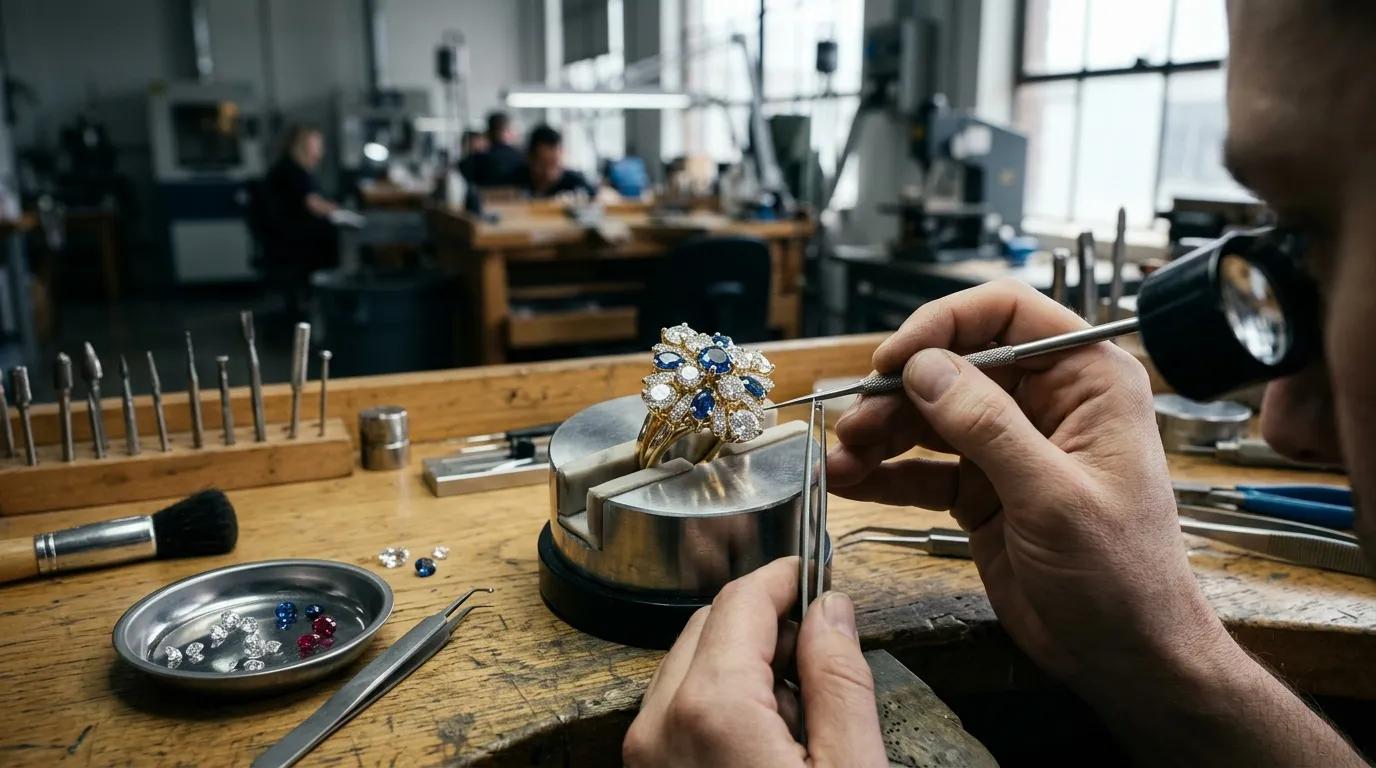
Stone setting problems can become more visible when a jewelry design moves from sampling to mass production. A sample may have secure stones and a consistent appearance, while bulk orders develop loose stones, uneven prongs, damaged gemstones, or differences between individual pieces.
These failures do not always come from the same source. The design, gemstone dimensions, metal condition, setting method, operator technique, and inspection process can all affect the result. If you only correct the finished piece without identifying the cause, the same defect may return throughout the order or in future reorders.
At SSJew, we approach custom jewelry manufacturing by considering how design, materials, stone setting, finishing, and quality requirements work together. For your project, the goal is not simply to secure each stone. It is to establish a repeatable process that produces jewelry consistent with the approved sample and agreed specifications.
Why Stone Setting Problems Appear in Bulk Orders
A sample and a bulk order are produced under different conditions. A sample can demonstrate that a design is workable, but it cannot automatically establish that every component and setting will remain consistent across a larger production run.
Several factors can explain the difference.
-
Component variation: Small differences in stone dimensions, metal thickness, prong geometry, or setting openings can affect how a stone fits.
-
Process variation: Changes in setting pressure, tool positioning, or work sequence may produce inconsistent results.
-
Design limitations: A setting that works on one carefully prepared sample may be difficult to reproduce if its geometry leaves little room for variation.
-
Inspection gaps: A final visual check may miss a weak setting, a small gemstone chip, or a defect that becomes apparent only during handling.
For you, this distinction matters when deciding whether to approve a sample. Ask not only whether the sample looks correct, but also which specifications and process conditions need to remain consistent in bulk production.
Common Causes of Stone Setting Failures
1. Setting Geometry Does Not Adequately Support the Stone
Prongs, bezels, channels, and pavé settings rely on different structural principles. Each design must provide suitable support for the stone while allowing the setting operation to be completed without damaging the gemstone or surrounding metal.
Prongs that are too small, poorly positioned, or inadequately formed may fail to retain a stone securely. A bezel with unsuitable dimensions may not hold the stone evenly. Channel settings can be sensitive to the fit between the stones and the surrounding metal, while pavé designs require consistent spacing and support.
The problem may originate in the original CAD design rather than in the setting operation alone. Before sampling, review the stone-retaining features, metal thickness, access for setting tools, and the relationship between adjacent stones.
2. Gemstone Dimensions or Shapes Are Inconsistent
A stone's nominal size does not guarantee an identical fit across every piece. Actual dimensions, outline, depth, girdle condition, and shape can affect how the stone sits in its setting.
This is particularly relevant when your design uses multiple stones in a row or requires closely matched pairs. A dimensional difference that seems small on its own may become noticeable when several stones are set together.
Before bulk production, confirm the stone specifications and acceptable variation with your supplier. Where the design is sensitive to fit, agree on how stones will be checked and matched before setting. Do not assume that all stones described by the same nominal size will behave identically.
3. Setting Pressure Damages Stones or Metal
Stone setting requires enough force to retain the gemstone, but excessive or poorly directed pressure can create other problems. Depending on the stone and setting design, this may lead to chipped edges, surface damage, bent prongs, distorted bezels, or stress in the surrounding metal.
The appropriate technique depends on the gemstone, its shape, the setting type, and the metal structure. A method suitable for one stone or design may not be appropriate for another.
If damage appears during setting, examine the location and pattern of the defect. Chips around a stone's edge, for example, warrant checking the stone condition, setting geometry, and the way force is applied. Simply tightening the setting further may increase the risk rather than solve it.
4. Metal Condition and Component Quality Vary
The metal surrounding a stone must be suitable for the intended setting process. Material condition, local thickness, prior forming, and component consistency can all affect how the metal responds when prongs or bezels are moved into position.
If a component is too thin or has already been heavily deformed, it may be difficult to set consistently. Differences between components can also create variation in the finished appearance, even when the same setting method is used.
When sourcing custom silver, gold, or brass jewelry, confirm the agreed material and construction requirements. For designs with delicate settings, review the relevant metal sections and connections before approving the sample.
5. Finishing or Later Operations Affect the Setting
Stone setting is not always the last operation. Polishing, cleaning, assembly, and surface finishing may occur before or after setting, depending on the design and production route.
If the sequence is unsuitable, later operations may damage stones, alter the appearance of the setting, or place stress on delicate features. Aggressive polishing around small prongs, for example, can remove material that helps retain the stone. Handling and assembly can also affect vulnerable settings.
Your manufacturer should consider the complete production sequence, not treat setting as an isolated task. The appropriate order depends on the product structure, gemstone, and finishing requirements.
How to Prevent Stone Setting Defects Before Mass Production
Review the Design During CAD and Sampling
At SSJew, we can discuss your design requirements as part of a custom jewelry manufacturing project. CAD review and prototyping can help identify setting geometry that may be difficult to produce consistently, including delicate prongs, narrow channels, and closely spaced stones.
Use sampling to evaluate more than appearance. Check stone fit, setting symmetry, prong or bezel condition, and the overall finish. If a design requires adjustment, confirm the revision before bulk production rather than relying on informal changes during manufacturing.
Define Stone and Component Requirements
Before production, agree on the relevant gemstone dimensions, shape, appearance requirements, and setting specifications. Also confirm the material and critical dimensions of the metal components.
The level of control should reflect the design's sensitivity. A simple bezel with one stone may require different checks from a pavé design containing many small stones. Your acceptance criteria should address the risks that matter to your specific product.
Establish Checks at Critical Stages
Final inspection is important, but it should not be the only opportunity to identify setting defects. Depending on the design, useful checkpoints may include component inspection before setting, inspection after setting, and a final review after finishing and assembly.
The checks should cover more than whether a stone is present. Inspect for visible chips, scratches, uneven prongs, gaps, distorted metal, inconsistent spacing, and signs that a stone is not properly seated.
Agree on the inspection method and acceptance criteria with your manufacturer before production. Do not assume that a particular test or sampling plan is included unless it has been confirmed for your order.
Control Sample-to-Bulk Consistency
Keep the approved sample and its relevant specifications as a reference for production. Document critical details such as stone dimensions, setting appearance, component geometry, and acceptable cosmetic variation where applicable.
For repeat orders, compare the new production against the agreed requirements rather than relying only on memory or general descriptions. If a defect appears, identify the affected batch and production stage, investigate the likely cause, and verify that the corrective action addresses the underlying problem.
What You Should Confirm Before Approving Bulk Production
Use these questions when discussing your order with a jewelry manufacturer.
Area
What You Should Confirm
Design
Have the setting geometry and critical metal sections been reviewed?
Gemstones
Are dimensions, shape, appearance, and acceptable variation specified?
Setting process
Which setting method is intended, and are any design limitations known?
Inspection
What defects will be checked, at which stages, and against what criteria?
Sample approval
Which features of the approved sample must be maintained in bulk production?
Corrective action
How will the affected batch be investigated if loose stones or damage are found?
Reorders
Which specifications and reference samples will be used to maintain consistency?
Clear requirements reduce the risk of disagreements after production. Instead of asking only for “good stone setting,” define the visible and functional characteristics that matter to your product.
What to Do When Stone Setting Defects Appear
If you find loose stones, chipped gemstones, or inconsistent settings in a bulk order, document the affected products before arranging repairs. Record the defect location, quantity involved, product variation, and stage at which the issue was discovered. Clear photographs and a comparison with the approved sample can help the investigation.
Ask your manufacturer to determine whether the issue is limited to individual pieces or may affect a wider batch. The response should identify the likely cause, explain the proposed correction, and establish how the revised result will be checked.
Repairing individual pieces may be appropriate in some cases, but repeated defects require a broader investigation. If the cause is a dimensional mismatch or unsuitable setting geometry, repeating the same process is unlikely to provide a reliable long-term solution.
Frequently Asked Questions
Why do stones become loose after production?
Possible causes include unsuitable setting geometry, insufficient retention, variation in stone dimensions, metal deformation, or damage during later operations. The cause should be identified before deciding on a repair.
Does a sample approval guarantee consistent bulk production?
No. Sample approval confirms that the reviewed sample meets the agreed requirements. Consistency also depends on maintaining relevant material, component, process, and inspection requirements during bulk production.
Can loose stones simply be tightened?
Some settings may be repairable, but the appropriate action depends on the stone, metal, and cause of the defect. Tightening without investigating the cause may damage the stone or leave the underlying problem unresolved.
What information should you provide when reporting a setting defect?
Share the product reference, affected quantity, photographs, defect location, and whether the issue appeared before or after finishing or assembly. Include the approved sample or relevant specifications if available.
Discuss Your Custom Jewelry Project with SSJew
If your collection includes delicate prongs, pavé details, channel settings, or other stone-set designs, define the critical requirements before approving bulk production.
At SSJew, we can discuss your design, material requirements, sampling needs, and manufacturing considerations for custom jewelry projects. Share your drawings or reference images and explain any setting issues you need to prevent. This gives us a practical starting point for reviewing the requirements and clarifying the points that need attention before production.
Contact SSJew to discuss your custom jewelry manufacturing requirements and the quality expectations for your next order.