Pre-Shipment Jewelry Inspection: What Brands Should Check
Pre-Shipment Jewelry Inspection: What Brands Should Check
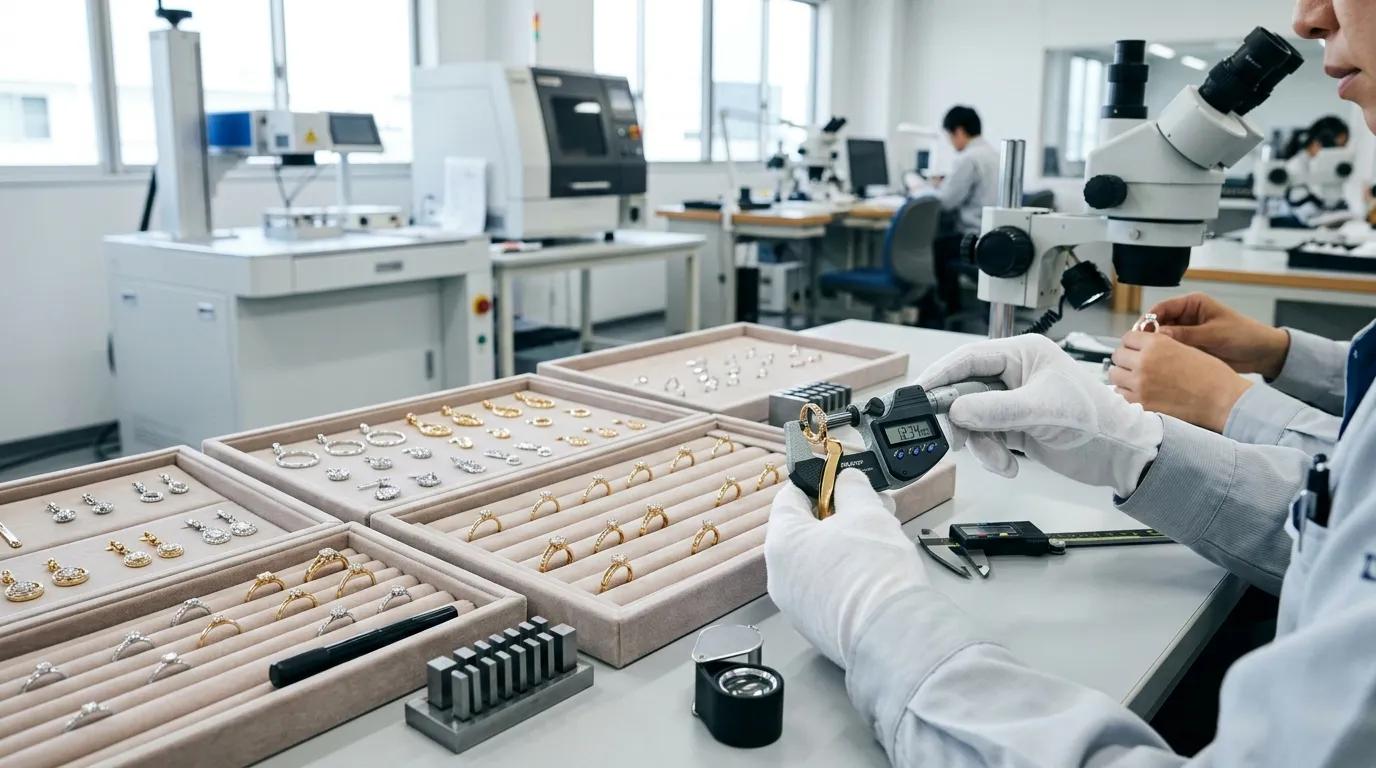
Your jewelry order may be finished, but that does not automatically mean it is ready to ship. Before releasing a bulk order, you need to confirm that the finished products match your approved sample, purchase order, product specifications, and agreed acceptance criteria.
Pre-shipment jewelry inspection helps you identify nonconforming products before they leave the supplier. It also provides a documented basis for deciding whether to approve shipment, request corrective action, or arrange a further inspection.
At SSJew, we understand that the checks required depend on your design, materials, manufacturing processes, and order requirements. A plated brass pendant, a sterling silver ring, and a stone-set earring have different risk points. Your inspection plan should reflect those differences rather than rely on a generic visual check.
What Is Pre-Shipment Jewelry Inspection?
Pre-shipment inspection is a final quality check performed when an order is sufficiently complete for evaluation before shipment. It typically covers product conformity, workmanship, function, quantity, labeling, and packaging, according to the requirements agreed for the order.
It serves a different purpose from in-process inspection. Checks during casting, polishing, stone setting, or plating can identify problems while production is underway. A pre-shipment inspection evaluates the finished order against the agreed requirements and helps you make a shipment decision.
A final inspection cannot correct every problem or prove every product property. For example, visual inspection may reveal uneven plating color, but it cannot by itself verify coating thickness or long-term wear resistance. If your specification requires material analysis, a particular performance test, or compliance documentation, include those requirements separately.
Pre-Shipment Jewelry Inspection Checklist
Use this checklist as a starting point. Before production begins, adapt it to your product and record the acceptance criteria that apply to your order.
1. Check the Approved Sample and Product Specifications
-
Confirm the product code, design version, and purchase order.
-
Compare the finished pieces with the approved sample, drawings, and specification sheet.
-
Check shape, proportions, dimensions, thickness, and component placement.
-
Verify that approved changes have been documented and incorporated.
-
Confirm that any permitted variations are clearly defined.
An approved sample is an important visual reference, but it should not be the only acceptance document. A sample may not clearly communicate every measurement, material grade, functional requirement, or packaging detail.
Before shipment, resolve any differences between the sample, drawings, and written specifications. If a design changed after sample approval, make sure the correct version is being used for inspection. Otherwise, you may end up comparing finished products against outdated requirements.
2. Verify Materials, Dimensions, and Construction
-
Check material identification against the purchase order and agreed specifications.
-
Review required material documentation or test results, where applicable.
-
Measure specified dimensions, such as ring size, chain length, pendant width, or component thickness.
-
Inspect joints, soldered areas, links, and assembled parts for visible workmanship problems.
-
Look for sharp edges, burrs, gaps, or exposed points that fall outside the agreed requirements.
-
Confirm required stamps, logos, or hallmarks where applicable.
The appropriate method depends on the requirement. Dimensions can be measured against stated tolerances, while some material properties require documentation or testing. Appearance alone cannot reliably prove that a metal meets a specified composition or precious-metal standard.
Pay particular attention to construction features that affect use. A clasp, hinge, jump ring, or chain connection may look acceptable but still fail to operate as intended. Define the relevant functional checks and any required performance thresholds before the inspection takes place.
3. Inspect Surface Finish, Plating, and Color
-
Check for scratches, dents, pits, stains, polishing marks, and visible contamination.
-
Compare the finish with the approved reference, such as polished, matte, brushed, or textured.
-
Inspect plating or PVD color under consistent lighting.
-
Look for uneven coverage, visible peeling, blisters, or exposed base metal.
-
Check edges, recesses, joints, and detailed areas where finishing can be difficult.
-
Compare comparable pieces for noticeable color or finish variation.
Surface defects can originate at different manufacturing stages. Casting or forming may leave marks that require further surface preparation. Polishing can affect the consistency of the final surface, while plating or PVD processes introduce their own requirements for preparation and coating control.
When inspecting a batch, compare products under similar lighting conditions. Different lighting can make the same finish appear different and complicate decisions about color consistency. Use the approved sample or a clearly defined color reference wherever possible.
Visual inspection is useful for visible defects, but it cannot establish every coating property. If plating thickness, adhesion, corrosion resistance, or wear performance matters to your product, specify the required verification method and acceptance criteria in advance.
4. Check Stone Setting and Functional Components
-
Confirm stone type, size, color, quantity, and placement against the specification.
-
Check for missing, chipped, visibly damaged, or mismatched stones.
-
Inspect prongs, bezels, channels, and other settings for visible irregularities.
-
Look for uneven alignment, obvious gaps, or incomplete setting work.
-
Test clasps, hinges, closures, and other functional components as agreed.
-
Confirm that decorative parts are secure using the appropriate inspection method.
Stone-set jewelry needs attention to both appearance and setting integrity. A stone may look centered from the front while the setting has an issue that is difficult to see from that angle. Inspect relevant areas from more than one direction, using suitable magnification where needed.
Do not treat a visual check as conclusive proof that a stone is secure. If your product requires a specific stone-security test or functional test, agree on the method and acceptance threshold before production. The test should suit the design and avoid damaging conforming products.
5. Verify Quantity, SKU, Labels, and Packaging
-
Confirm the finished quantity against the purchase order.
-
Check that product styles, sizes, colors, and SKUs are correctly sorted.
-
Verify labels, barcodes, logos, and other identification details.
-
Check that the agreed packaging components and inserts are included.
-
Inspect protective packaging for visible damage or inadequate protection.
-
Confirm carton markings and packing details against the shipping instructions.
A product can pass its quality checks and still create a costly problem if the wrong SKU is packed, quantities are short, or labels are incorrect. Packaging requirements should therefore be included in the inspection plan rather than left until the last moment.
If your products require individual bags, jewelry cards, branded boxes, protective inserts, or specific labeling, record these requirements clearly. Confirm not only that the packaging is present but also that it matches the approved version and is suitable for the agreed shipping arrangement.
How to Set a Practical Inspection and Sampling Plan
You do not necessarily need the same inspection approach for every jewelry order. Your plan should reflect product complexity, order quantity, defect risk, customer requirements, and the consequences of a quality failure.
Before production, agree on four points:
-
Inspection scope: Which product characteristics, documents, and packaging requirements will be checked?
-
Sampling method: Will the order be checked in full for certain characteristics or evaluated using an agreed sample?
-
Defect classification: How will critical, major, and minor defects be defined for this product?
-
Acceptance criteria: What results permit acceptance, and what results require corrective action or rejection?
For larger orders, an agreed sampling plan can make inspection more practical. If you use AQL (Acceptance Quality Limit), specify the applicable standard, inspection level, sample size, defect categories, and acceptance and rejection numbers. Simply writing “AQL inspection required” leaves important decisions unresolved.
AQL-based sampling does not guarantee that every item in the shipment is defect-free. It is a defined method for making a lot-acceptance decision based on a sample. For high-risk requirements, such as a critical functional feature or a specific material property, you may need additional checks beyond a general visual sampling plan.
You should also agree on who will inspect the order, when inspection can take place, what evidence will be recorded, and whether shipment must remain on hold until the results are reviewed. Clear responsibilities reduce the chance of a disagreement at the final stage.
What Should You Do If Jewelry Fails Inspection?
If the inspection identifies nonconforming products, do not rely on a verbal statement that the issue has been resolved. Record the findings and follow the acceptance process agreed for the order.
First, document the issue. Record the product code, defect type, affected quantity, inspection method, and supporting photographs or measurements. Link each finding to the relevant specification or acceptance criterion.
Second, separate affected products where practical. This helps prevent items that require review or rework from being mixed with products that have passed inspection.
Third, agree on corrective action. Depending on the defect, the appropriate response may involve sorting, rework, replacement, further testing, or another action allowed by the purchase agreement.
Fourth, reinspect the affected products. Confirm that the corrective action has addressed the specified issue. If the defect may be systematic, consider whether additional products or production stages need review.
Finally, make the shipment decision against the agreed criteria. Do not approve shipment solely because the delivery date is approaching. If the order does not meet the requirements, document the outstanding issue and agree on the next step with your supplier.
Common Pre-Shipment Inspection Mistakes
Inspecting only appearance. Surface quality matters, but it does not prove material composition, dimensions, functional performance, or packaging accuracy.
Using unclear acceptance standards. Terms such as “good finish” or “acceptable color” can be interpreted differently. Use measurements, approved references, defect examples, and written limits.
Changing requirements at the final stage. New criteria introduced after production can create avoidable disputes. Define the requirements before the order begins and document approved changes.
Ignoring hidden or less visible areas. Clasps, joints, backs, edges, recessed details, and stone settings may need separate attention.
Treating sampling as a guarantee. A sample-based inspection provides evidence for a lot-acceptance decision, not proof that every piece is defect-free.
Approving shipment without reviewing the findings. Make sure the inspection results, unresolved defects, corrective actions, and shipment decision are documented.
Questions to Ask Your Jewelry Manufacturer
Before your order is released, ask your manufacturing partner:
-
How will you compare the finished products with our approved sample and specifications?
-
Which checks will be performed during production and before shipment?
-
How will material, dimensions, surface finish, and functional requirements be verified?
-
What inspection and sampling plan will apply to this order?
-
How will defects be classified, recorded, and handled?
-
Can we review the inspection findings before approving shipment?
-
How will you control design or specification changes that affect bulk production?
At SSJew, our custom jewelry manufacturing work can involve CAD, prototyping, sampling, casting, stamping, CNC, polishing, stone setting, surface finishing, assembly, and quality inspection, depending on your design and agreed project scope. When you share your product specifications and acceptance requirements, we can discuss the manufacturing processes involved and clarify the checks that need to be considered for your order.
FAQ
When should pre-shipment jewelry inspection take place?
It should take place when the order is sufficiently complete for the agreed inspection to be meaningful and before shipment is approved. Confirm the timing with your supplier so there is enough time to review findings and address nonconforming products.
Is third-party inspection necessary?
Not for every order. You may use your own team, your supplier’s agreed inspection process, or an independent inspection provider, depending on the order risk, contract, and internal quality requirements. If you use a third party, define the inspection scope and acceptance criteria in advance.
Does an AQL inspection mean every piece has been checked?
No. AQL is associated with sampling inspection plans. Only the selected sample is inspected under that plan, unless separate checks are specified. The result supports a decision about the lot under the agreed rules; it does not guarantee zero defects.
What should an inspection report include?
It should identify the order and products inspected, inspection date and scope, sampling method where applicable, findings, defect classification, supporting evidence, and the result against the agreed acceptance criteria. Record any corrective action and follow-up inspection when relevant.
Can I approve shipment if minor defects are found?
That depends on your written acceptance criteria and the nature of the defects. Define acceptable limits before production. If findings exceed those limits or affect a critical requirement, document the issue and agree on the appropriate corrective action before shipment approval.
Conclusion: Make Shipment Approval Part of Your Quality Plan
Pre-shipment jewelry inspection is most useful when it is based on clear product specifications, an approved sample, appropriate inspection methods, and acceptance criteria agreed before production. Check appearance, dimensions, materials, setting quality, function, quantity, labels, and packaging according to your product’s requirements. Record nonconformities and verify corrective action before making the final shipment decision.
If you are developing a jewelry collection or preparing a bulk order, SSJew can discuss your design, materials, finishing, sampling, and quality requirements as part of a custom jewelry manufacturing project. Share your product specifications and inspection expectations with our team so we can review the manufacturing requirements and clarify the next steps for your order.