Jewelry Sample vs Bulk Production: Common Quality Differences
Jewelry Sample vs Bulk Production: Common Quality Differences
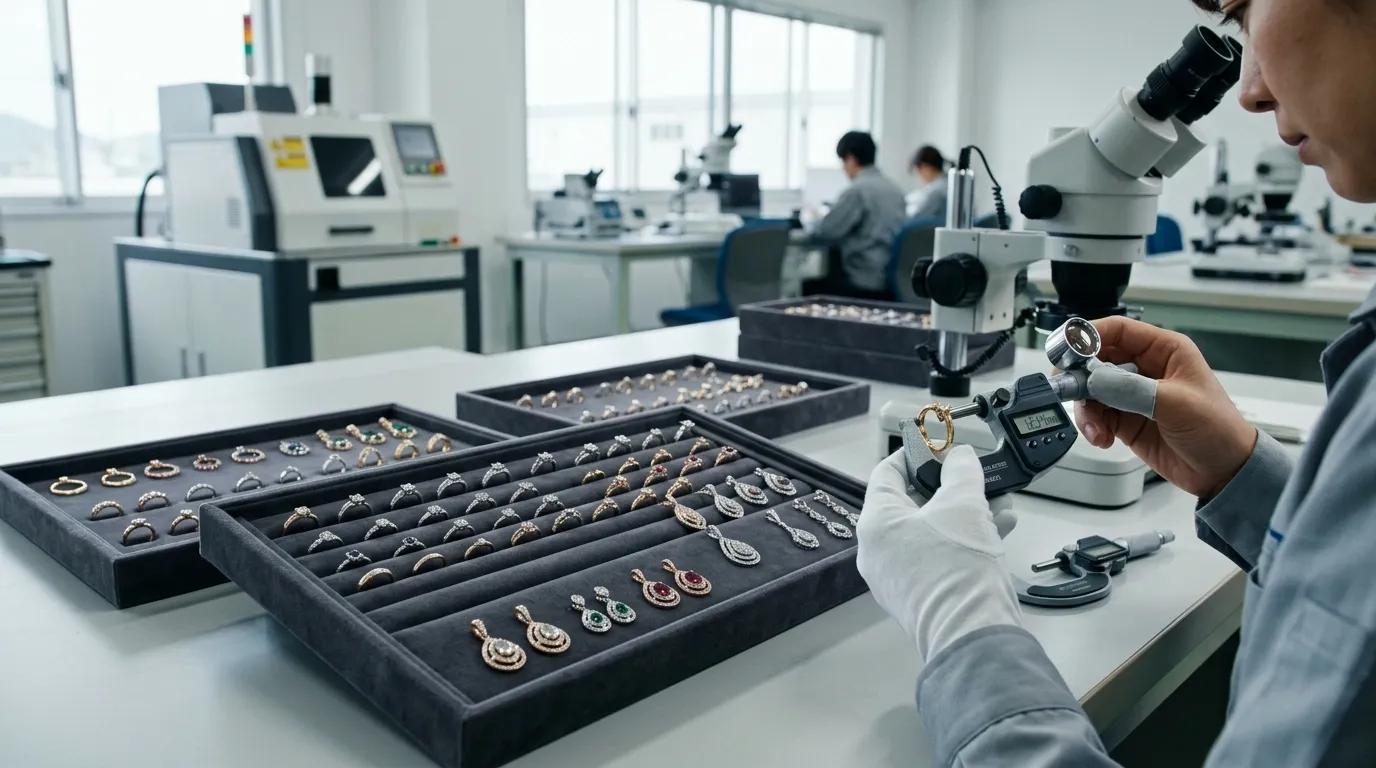
An approved jewelry sample gives you a reference for the product you intend to sell, but it does not automatically guarantee that every piece in a bulk order will look and perform exactly the same. Differences can arise when a design moves from prototyping to repeatable manufacturing, especially when the product involves casting, polishing, stone setting, plating, or multiple assembled components.
If you are sourcing jewelry for your brand, the key is not to expect every handmade detail to be identical. It is to define which characteristics must remain consistent, what tolerances are acceptable, and how those requirements will be checked during production.
At SSJew, our custom jewelry manufacturing work can involve CAD, prototyping, sampling, casting, stamping, CNC, polishing, stone setting, surface finishing, assembly, and quality inspection, depending on the project. Understanding how these stages affect the finished product helps you establish clearer requirements before approving a bulk order.
Why Can Jewelry Samples and Bulk Production Differ?
A sample is often developed to confirm a design, appearance, material choice, and construction approach. Bulk production adds another requirement: the product must be manufactured repeatedly within agreed specifications.
The method used to create a sample may also differ from the method used for the production run. A prototype may involve more individual adjustment, while bulk manufacturing relies on defined tools, process settings, production steps, and repeatable quality checks. Even when the same design is used, differences in materials, finishing, assembly, or process control can affect the result.
The solution is to turn sample approval into a documented production reference. Your approved sample should be supported by drawings, dimensions, material requirements, finish specifications, and clear acceptance criteria.
7 Common Quality Differences Between Samples and Bulk Jewelry
1. Dimensions and Shape
Bulk pieces may show differences in dimensions, proportions, or contours compared with the approved sample. Casting shrinkage, tool variation, machining, and polishing can all affect final measurements, depending on the design and manufacturing method.
Polishing deserves particular attention. It removes material from the surface, so excessive or inconsistent polishing can change edges, thickness, engraved details, or the definition of a design.
What you should confirm: Record the critical dimensions and acceptable tolerances on the specification sheet. For detailed or tightly fitted components, confirm how measurements will be taken and which dimensions are most important to product function or appearance.
2. Materials and Components
Differences can occur if materials, stones, findings, chains, clasps, or other components vary between the sample and production order. Even when components have similar appearances, their specifications may not be identical.
For example, a change in stone size can affect how a setting looks and fits. A different clasp may alter both appearance and function. Material substitutions can also affect color, weight, finishing requirements, or compatibility with later processes.
What you should confirm: Specify the required material, grade where applicable, component details, and approved substitutions. If material composition or another property must be verified, identify the appropriate documentation or test method instead of relying on appearance alone.
3. Surface Finish and Plating Color
Surface finish is a common source of visible sample-to-bulk differences. One piece may appear brighter, smoother, darker, or more yellow than another because of differences in polishing, surface preparation, coating conditions, geometry, or finishing operations.
Electroplating and PVD also require suitable process control. Recessed areas, edges, and complex shapes may not finish in the same way as broad, flat surfaces. A sample viewed under one lighting condition may also appear different from a production batch photographed or inspected under another.
What you should confirm: Define the finish type, use the approved sample as a reference, and compare products under consistent lighting. If color tolerance, coating thickness, adhesion, or wear performance matters, document the relevant acceptance limits and verification methods separately.
4. Stone Setting and Assembly
Stone-set jewelry may differ in stone alignment, spacing, setting appearance, or the consistency of decorative details. Small variations in stone dimensions or setting geometry can affect the final look. Assembly can also introduce differences in the position of components or the movement of hinged parts.
These issues are not always obvious from a front-facing photograph. A setting may appear symmetrical from one angle while a prong, bezel, or connection requires closer inspection.
What you should confirm: Specify stone type, size, color, placement, and acceptable visual variation. Check the relevant areas from suitable angles and agree on how stone security and functional components will be evaluated.
5. Weight and Structural Details
A bulk piece may have a different weight or feel from the sample if dimensions, wall thickness, internal structure, component selection, or finishing differ. Weight variation alone does not necessarily prove a defect, because small design or material differences can affect it. However, an unexplained difference may indicate that an important specification has changed.
What you should confirm: If weight or thickness is commercially or functionally important, record the target value and acceptable tolerance. Also specify critical structural dimensions rather than using weight as a substitute for all other measurements.
6. Engraving, Logos, and Packaging
Brand details can vary when engraving depth, logo placement, stamp clarity, label information, or packaging components are not controlled consistently. These differences may not affect the basic structure of a piece, but they can affect presentation, brand identity, and order accuracy.
Packaging differences can also occur when the production team uses an outdated artwork file, an unapproved box, or incorrect SKU labels.
What you should confirm: Approve the final artwork and packaging version, identify logo positions and dimensions where necessary, and include labels, inserts, and packaging in the order specifications.
7. Functional Performance
A sample may operate correctly while some bulk pieces have clasps that are difficult to close, hinges that bind, or links and connections that do not perform as intended. Assembly variation, component tolerances, or changes in supplied findings can affect function.
What you should confirm: Define how functional parts should operate and what checks are required. If you need a specific force, cycle count, or performance threshold, agree on the test method before production. A quick visual or hand check should not be treated as proof of long-term durability.
How to Reduce Sample-to-Bulk Quality Differences
You can reduce the risk of unexpected variation by taking five practical steps before and during production.
1. Approve a complete production reference. Keep the approved sample together with the latest drawings, dimensions, material details, finish specifications, and packaging requirements. Confirm that all documents refer to the same design version.
2. Define acceptable tolerances. Not every minor difference is a defect. Identify which dimensions, colors, finishes, weights, or component positions must remain within specific limits. Avoid vague instructions such as “same as sample” when a measurable requirement is important.
3. Review manufacturing feasibility before bulk production. A design that looks suitable as a prototype may need adjustments for repeatable production. Discuss narrow details, small stone settings, thin sections, complex surface textures, and other features that could be difficult to reproduce consistently.
4. Check critical features during production. Do not wait until the entire order is finished to discover a recurring issue. Depending on the design, suitable checks may take place after casting, machining, polishing, plating, stone setting, or assembly. The appropriate stages should be agreed for the specific project.
5. Control changes and verify the finished order. Record any approved changes to materials, components, design files, or finishing requirements. Before shipment, compare finished products against the agreed specifications and acceptance criteria.
What Should You Confirm Before Approving Bulk Production?
Use this checklist before authorizing a production run:
-
Is the approved sample identified and recorded?
-
Are the latest drawings and design files available?
-
Are materials, stones, findings, and components clearly specified?
-
Are critical dimensions and tolerances documented?
-
Is the required surface finish and color reference agreed?
-
Are logo, engraving, labeling, and packaging requirements confirmed?
-
Have important production risks and required inspections been discussed?
-
Are defect categories and acceptance criteria defined?
-
Is there a clear process for handling nonconforming products and approved changes?
These requirements help both sides work from the same reference. They also provide a more objective basis for evaluating quality if differences appear during bulk production.
Common Mistakes to Avoid
Approving only from photographs. Photos can help communicate appearance, but they may not reveal dimensions, material properties, structural details, or functional performance.
Assuming the sample is a complete specification. A physical sample cannot communicate every tolerance, test method, or packaging requirement. Document important details separately.
Changing materials or processes without reviewing the impact. A substitution may affect color, weight, fit, finishing, or durability. Require approval when a change affects an agreed specification.
Waiting until shipment to check consistency. Final inspection is important, but production-stage checks can identify recurring problems earlier and may reduce rework.
Failing to define acceptable variation. If you do not agree on tolerances in advance, even a small difference can become a dispute.
FAQ
Does an approved jewelry sample guarantee bulk production quality?
No. It provides a reference for the intended product, but consistent bulk production also depends on documented specifications, suitable manufacturing processes, material and component control, and quality checks.
What is a golden sample in jewelry manufacturing?
A golden sample is a designated reference sample used to communicate the approved product standard. If you use one, identify it clearly and keep it linked to the correct drawings, specifications, and order version. The term alone does not define acceptance tolerances.
Are all differences between samples and bulk products unacceptable?
No. Some variation may be acceptable within agreed tolerances, depending on the product and process. Differences that affect critical dimensions, material requirements, function, safety, or the approved appearance should be evaluated against the written acceptance criteria.
How can I improve consistency on repeat orders?
Keep the approved design version, material and component specifications, finish requirements, critical dimensions, and inspection criteria available for future orders. Review proposed changes before production rather than assuming a repeat order will automatically use exactly the same inputs.
Conclusion: Make Sample Approval a Production Control Step
The most reliable way to manage sample-to-bulk consistency is to combine an approved reference sample with clear specifications, defined tolerances, controlled changes, and suitable checks during production and before shipment.
At SSJew, we can discuss your design, materials, finishing, sampling, and manufacturing requirements as part of a custom jewelry project. If you are preparing a new collection or planning a repeat order, share your sample or design files and the quality characteristics that matter most to your brand. This gives us a practical starting point for reviewing the manufacturing requirements and clarifying the next steps for your order.