10 Common Jewelry Manufacturing Defects Brands Should Check
10 Common Jewelry Manufacturing Defects Brands Should Check
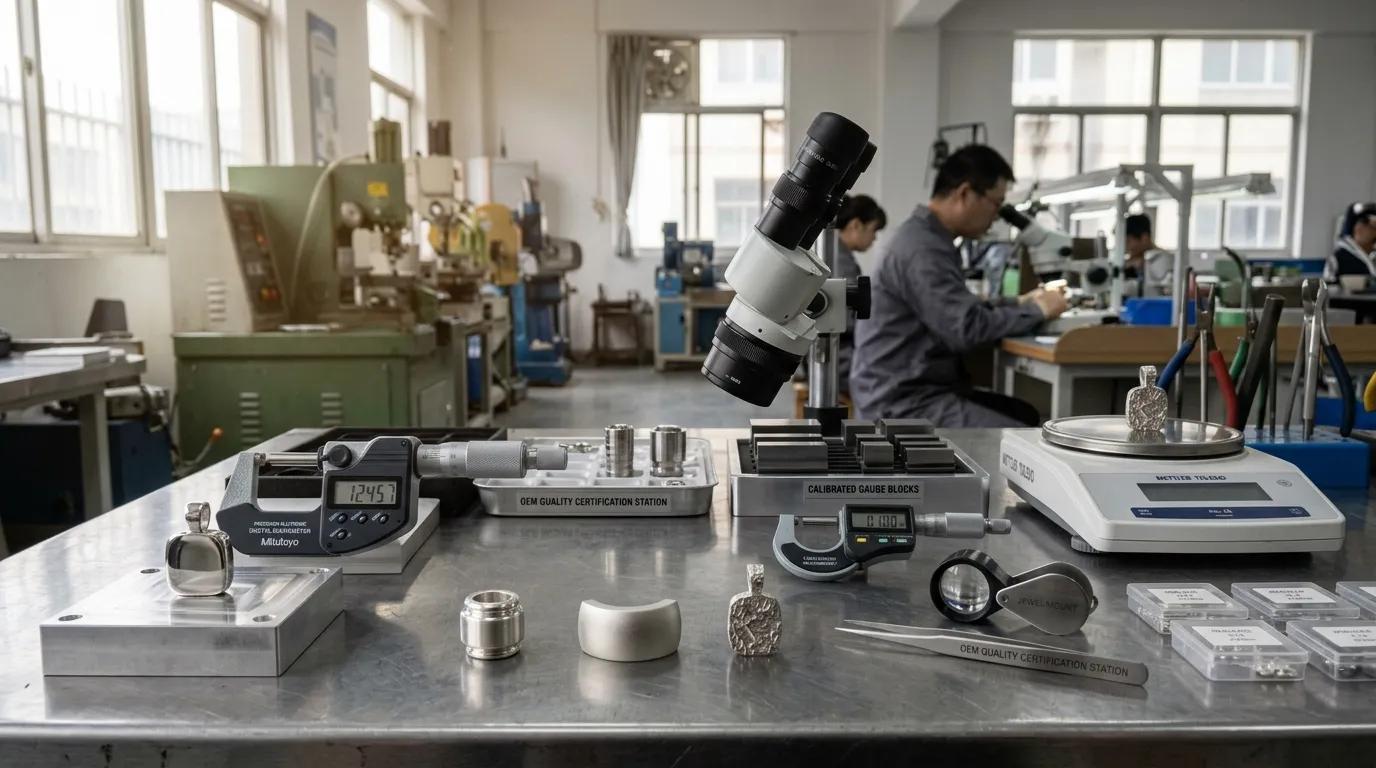
Jewelry manufacturing defects can affect appearance, fit, durability, customer satisfaction, and the cost of fulfilling an order. A small surface flaw may be a cosmetic issue, while a loose stone, sharp edge, or cracked joint can create a more serious quality or safety concern.
If you are sourcing custom jewelry for your brand, you need more than a final visual check. You need clear product specifications, an approved sample, appropriate inspection criteria, and a manufacturing partner who can identify problems before they reach finished goods.
At SSJew, we approach custom jewelry manufacturing with attention to materials, surface finishing, component details, and quality requirements. Understanding the following ten common defects will help you evaluate samples, prepare a practical quality checklist, and discuss corrective actions with your manufacturing partner.
Why Jewelry Defect Inspection Matters
Defects can originate at different stages, including casting, machining, polishing, stone setting, electroplating, assembly, and packaging. Some are visible immediately; others require dimensional checks, functional testing, or closer inspection.
Your inspection plan should therefore reflect the product's construction and intended use. A decorative pendant, a hinged bracelet, and a multi-stone ring do not have identical quality risks.
10 Common Jewelry Manufacturing Defects
1. Surface Scratches and Poor Polishing
What to check: Visible scratches, pits, uneven reflections, polishing marks, or inconsistent surface brightness.
These defects may result from inadequate surface preparation, unsuitable polishing methods, handling damage, or insufficient separation between components during processing.
How to inspect: Examine the product under consistent lighting. Check broad surfaces, edges, recessed details, and areas around stone settings. Compare the finish with the approved sample rather than relying on an undefined expectation of perfection.
How to prevent them: Specify the required finish, identify critical viewing areas, and agree on acceptable cosmetic variation before production. Polishing must also preserve important design features; excessive material removal can soften edges and reduce fine detail.
2. Plating Defects and Color Inconsistency
What to check: Uneven color, patchy coverage, visible discoloration, peeling, or unexpected differences between components.
Potential causes include inconsistent surface preparation, unsuitable processing conditions, contamination, or differences in the finishing process. Color variation can also occur when components are processed in different batches.
How to inspect: Compare components under consistent lighting and against an agreed color reference. Examine edges, recesses, joints, and other areas where coverage may be difficult to achieve uniformly.
How to prevent them: Specify the base material, intended color, surface appearance, and applicable coating requirements. Confirm the complete finish on the production-representative sample. Do not assume that matching color names alone guarantee identical results.
3. Casting Porosity and Surface Pits
What to check: Small holes, pinholes, pits, irregular cavities, or visible casting imperfections.
Casting-related defects may arise from metal flow, gas entrapment, shrinkage, mold conditions, or other process variables. Their significance depends on location, size, and whether they affect the component's structural integrity.
How to inspect: Look closely at thicker sections, junctions, recessed areas, and surfaces that will receive polishing or plating. Where structural integrity is a concern, visual inspection alone may not be sufficient.
How to prevent them: Review the design and casting feasibility during development. CAD review and prototyping can help identify geometry that may require attention. Agree on how visible imperfections and potentially structural defects will be evaluated and escalated.
4. Dimensional and Design Inaccuracies
What to check: Incorrect ring sizes, mismatched dimensions, uneven thickness, misplaced holes, or components that do not fit together.
Dimensional problems can result from design interpretation errors, tooling limitations, process variation, or material removal during finishing. A product may look correct while still failing to fit its intended chain, clasp, setting, or mating component.
How to inspect: Compare critical dimensions with the approved technical drawing. Identify the measurements that affect fit, function, and appearance, and define the applicable tolerances rather than relying on visual judgment alone.
How to prevent them: Confirm drawings, units, sizes, and critical dimensions before production. We can discuss design and prototyping requirements for your custom jewelry project so that important fit and geometry considerations are addressed before manufacturing proceeds.
5. Stone-Setting Defects
What to check: Loose or missing stones, uneven stone alignment, damaged prongs, excessive gaps, or stones that sit at inconsistent heights.
Problems may arise from setting geometry, inconsistent stone dimensions, unsuitable tolerances, handling, or inadequate inspection after setting. A stone can appear secure during a quick visual check but still require closer assessment.
How to inspect: Check alignment, visible gaps, prong condition, and the overall setting appearance. Use an appropriate professional setting-security check without risking damage to the stone or jewelry.
How to prevent them: Confirm stone specifications, setting dimensions, and the intended appearance during sampling. Establish suitable checks after setting and before final packaging. Any suspected loose stone should be assessed before the item is accepted.
6. Weak Joints and Soldering Defects
What to check: Visible gaps at joints, incomplete connections, cracks, excess solder, or components that move unexpectedly.
Joint defects can affect structural integrity and may become apparent when a product is handled or used. Their causes can include unsuitable joint design, poor fit between components, or inconsistent joining conditions.
How to inspect: Examine connection points and assess the relevant function of the component. For example, check whether a link, clasp, or attached decorative element behaves as intended.
How to prevent them: Review joint design and assembly requirements before production. Specify critical connections and appropriate functional checks. A joint that looks acceptable from the outside should not automatically be assumed to have adequate strength.
7. Sharp Edges, Burrs, and Poor Finishing
What to check: Rough edges, metal burrs, uncomfortable contact points, or finishing residue around openings and decorative details.
These problems can result from incomplete deburring, machining, stamping, cutting, or polishing. They are particularly important on products that contact the skin or include moving parts.
How to inspect: Examine edges and openings carefully. Assess relevant contact areas and moving components for roughness or interference. Use appropriate handling precautions when checking potentially sharp metal.
How to prevent them: Identify skin-contact areas, edges, and openings that require particular attention. Confirm finishing expectations during sampling and include these areas in the inspection criteria.
8. Material Inconsistency
What to check: Unexpected differences in base metal, component appearance, material identification, or documented material specifications.
Material-related issues may arise from incorrect material selection, component substitution, or inadequate traceability. Visual appearance alone cannot reliably establish metal composition or alloy grade.
How to inspect: Compare material declarations and purchase specifications with the supplied product and available supporting documentation. Where composition is critical, use an appropriate verification method rather than relying solely on appearance.
How to prevent them: Specify the required material clearly, including the relevant alloy or grade, and agree on documentation and verification requirements. For sterling silver, for example, state the required 925 standard and confirm how compliance will be established.
9. Assembly and Component Alignment Errors
What to check: Misaligned parts, inconsistent gaps, incorrectly installed clasps, stiff hinges, or components that interfere with one another.
Assembly problems can result from dimensional variation, incorrect component orientation, unsuitable fit, or inconsistent assembly procedures.
How to inspect: Check the assembled product from multiple angles. Operate clasps, hinges, and other functional components as appropriate. Confirm that paired earrings, linked pieces, and repeated components meet the agreed design requirements.
How to prevent them: Define assembly orientation, critical fit points, and functional acceptance criteria. Inspect important interfaces before final packaging, when correcting an issue may be more straightforward.
10. Packaging and Handling Damage
What to check: Scratches, tangled chains, bent components, broken clasps, or surface damage discovered after packing or transport.
Even a correctly manufactured item can be damaged through contact with other products, inadequate separation, or unsuitable packaging and handling.
How to inspect: Examine finished goods before packing and check packaging suitability for the product's shape and surface finish. Where relevant, review the condition of goods after transport.
How to prevent them: Specify individual protection, component separation, and suitable packaging for the product. Agree on any required packing checks and confirm that the packaging protects delicate surfaces and protruding details.
How to Build a Practical Jewelry QC Checklist
A useful inspection checklist translates your design requirements into observable or measurable acceptance criteria.
Inspection area
What to define
Appearance
Surface finish, visible defects, color reference
Dimensions
Critical measurements, sizes, tolerances
Materials
Required metal grade and supporting verification
Stone setting
Alignment, condition, security checks
Assembly
Joint condition, clasp and hinge function
Packaging
Protection, separation, finished-goods condition
Separate defects by their actual impact. A critical safety or functional defect should not be treated like a minor cosmetic variation. Agree on defect classifications and acceptance rules before production.
AQL-based sampling may be appropriate for defined inspection plans, but AQL is not a universal permission to ship defective products. The sampling method, defect categories, sample size, and acceptance numbers must be agreed in advance. Critical safety and functional requirements should be addressed explicitly.
How to Work with Your Jewelry Manufacturer
Quality is easier to manage when requirements are established before bulk production.
At SSJew, we can discuss your material, design, surface finish, sampling, and inspection requirements as part of a custom jewelry project. To make that discussion useful, prepare your technical drawings or reference images, identify critical dimensions and visual details, and explain the intended use of the product.
Before approving production, confirm which sample represents the agreed standard, how relevant defects will be inspected, and how deviations will be reported. If a defect is found, ask for the affected items to be assessed, the likely cause to be investigated, and any corrective action to be verified before the same process continues.
For repeat orders, retain the approved specifications and document any changes to materials, components, or finishing requirements. This helps reduce ambiguity when you reorder an existing design.
Frequently Asked Questions
What are the most serious jewelry manufacturing defects?
Loose stones, sharp edges, cracked structural joints, and defects affecting the function of a clasp or other component may require particular attention. Severity depends on the product and intended use.
When should I inspect custom jewelry?
Review the design and sample before bulk production, check relevant process stages where practical, and inspect finished goods before shipment. The exact plan depends on the product's complexity and agreed quality requirements.
Can I eliminate every jewelry manufacturing defect?
No manufacturing process can responsibly be assumed to produce zero defects in every circumstance. Your goal should be to define acceptable quality, prevent foreseeable problems, identify nonconforming products, and establish effective corrective actions.
What should I provide to help my manufacturer reduce defects?
Provide clear drawings or reference samples, material specifications, finish requirements, critical dimensions, functional expectations, and agreed inspection criteria. Clear requirements reduce interpretation errors.
Conclusion
The ten defects in this guide cover different stages of jewelry manufacturing, from material selection and casting to finishing, stone setting, assembly, and packaging. The most effective quality strategy is to identify risks early and translate your design requirements into clear, verifiable standards.
At SSJew, we can discuss your custom jewelry requirements, including materials, finishing, sampling, and quality inspection expectations. Share your design and the quality details that matter most to your collection so we can discuss a suitable manufacturing approach.
Developing a custom jewelry collection? Contact SSJew to discuss your product specifications, sampling requirements, and quality expectations before bulk production.